01
How rekeying actually works
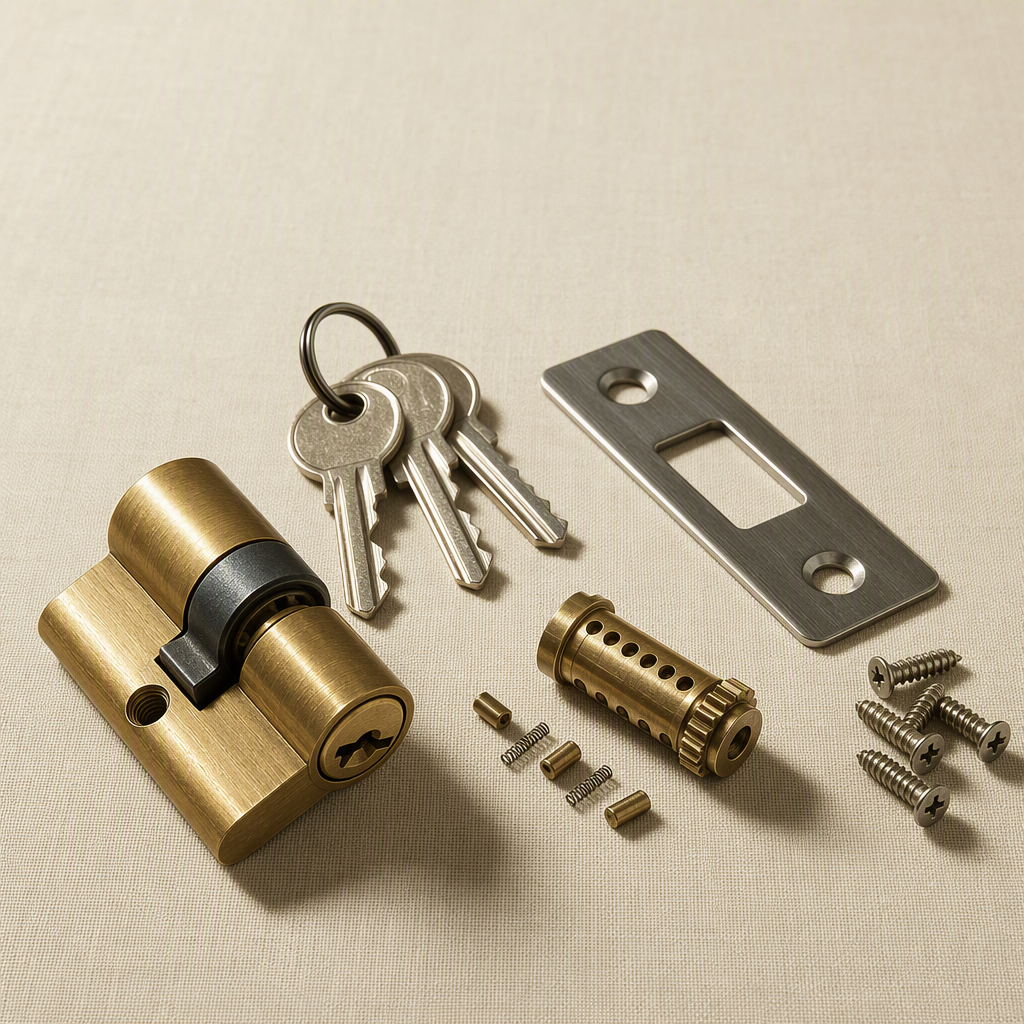
Inside a pin-tumbler cylinder sits a stack of small pins at heights that correspond to the cuts on your key. Change the pins and you change which key profile will turn the plug. The lock body, the finish and the way the door operates all stay exactly as they were — only the key that works it changes. This is why rekeying is quicker and less expensive than replacement, and why it does nothing to fix a lock that is mechanically worn.